
Carpet damage usually happens slowly, not all at once. In busy households with kids or pets, everyday activities like tracked-in dirt, spills, pet accidents, and constant foot traffic gradually break down carpet fibers. At Easy Clean Carpet Care, we see this kind of wear every day in family homes where life happens fast, and carpets take the brunt of it.
This post focuses on prevention: the habits and decisions that help families avoid permanent wear before it sets in. If you want a broader look at family-friendly carpet care, start with The Practical Guide to Carpet Care for Families with Kids or Pets, which lays out a complete roadmap for maintaining carpets in real-life homes.

Key Points
- Main Causes of Carpet Damage in Family Homes: Everyday activities such as tracked-in dirt, spills, pet accidents, and foot traffic gradually wear down carpet fibers, especially when moisture and abrasive dirt are involved.
- High-Risk Areas for Carpet Wear: Entryways, hallways, family rooms, dining areas, and pet zones experience concentrated use, making them the first spots to show signs of damage.
- Daily Habits for Carpet Preservation: Regular vacuuming, using doormats, blotting spills immediately, and rotating furniture help prevent damage and prolong carpet life.
- Common Mistakes That Worsen Carpet Damage: Over-wetting, aggressive scrubbing, using harsh cleaners, and neglecting professional cleaning can cause or accelerate Carpet deterioration.
- Benefits of Professional Carpet Cleaning: Professional cleaning removes embedded soil and controls moisture, helping to prevent long-term structural damage and extending the carpet’s lifespan.
What Causes Carpet Damage in Busy Households?
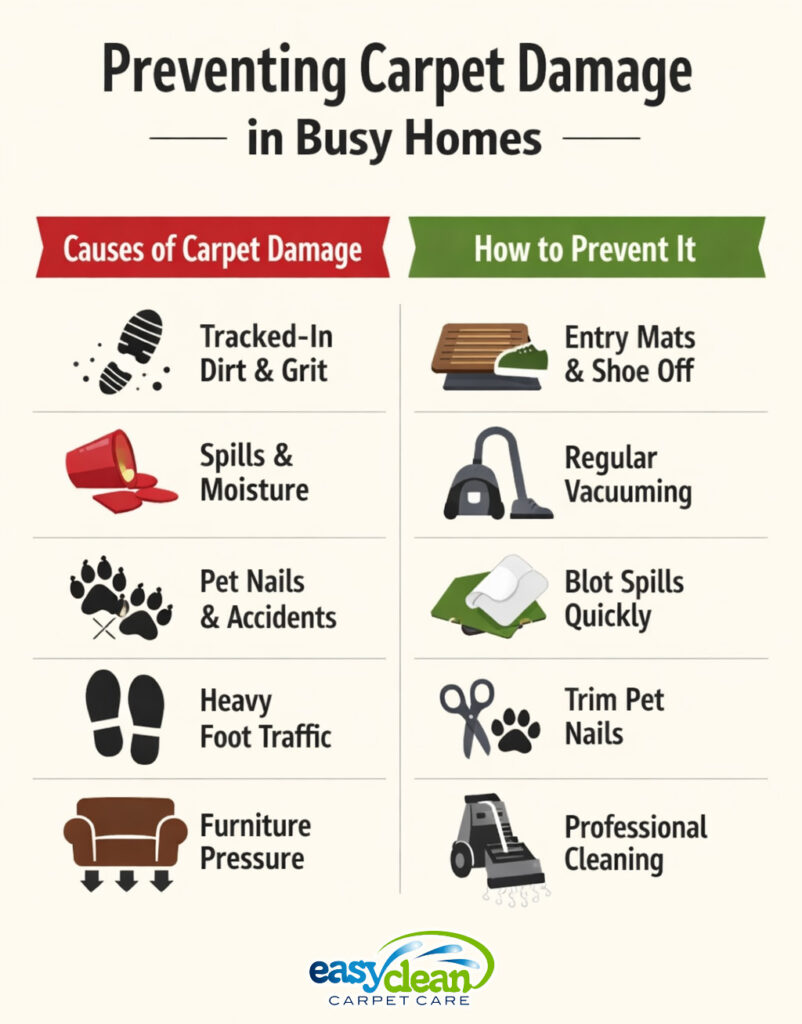
Carpet damage in family homes is caused primarily by abrasive dirt, moisture, pet activity, and concentrated foot traffic.
Fine grit and sand tracked in from outside act like sandpaper underfoot, cutting and fraying carpet fibers over time. According to cleaning industry guidance, dry soil is the most destructive type of carpet contaminant because it settles deep into the pile and breaks fibers with every step. Moisture from spills or pet accidents can further weaken fibers and seep into padding if not addressed quickly.
Pets accelerate wear in predictable ways. Nails can snag loops, body oils build up in favorite resting spots, and repeated accidents can damage both fibers and the carpet backing. Furniture compression and dragging also contribute by crushing fibers and distorting the carpet’s structure.
Understanding these causes makes prevention far more effective.
Which Areas of the Home Are Most at Risk for Carpet Damage?
Carpet damage appears first in areas that receive the most concentrated use.
Entryways and hallways experience constant foot traffic and collect the most dirt. Family rooms and living areas see frequent spills, play, and pet activity. Dining areas deal with dropped food, chair movement, and repeated pressure on the same spots. Pet zones—near doors, bowls, and sleeping areas—accumulate oils, dander, and moisture faster than other parts of the home.
Focusing prevention efforts on these high-risk areas helps slow wear where it matters most.
What Daily and Weekly Habits Help Prevent Carpet Damage?
Consistent light maintenance prevents carpet damage more effectively than occasional deep cleaning.
Vacuuming high-traffic areas at least twice a week removes the gritty particles that cause fiber abrasion. Industry guidance from the Carpet and Rug Institute recommends increasing vacuum frequency in homes with kids, pets, or heavy use. Consumer experts at Better Homes & Gardens and NBC News Select echo this recommendation, noting that frequent vacuuming protects carpet rather than harming it.
Using doormats inside and outside entrances helps trap dirt before it reaches the carpet. Blotting spills immediately—without scrubbing—prevents moisture from spreading and damaging fibers. Rotating furniture occasionally reduces permanent indentations, and keeping pet nails trimmed minimizes snagging and tearing.
For a structured routine that fits family life, see Carpet Cleaning Routines That Work for Kids and Pets, which breaks daily and weekly care into manageable steps.
What Common Mistakes Make Carpet Damage Worse?
Carpet damage often worsens because of well-intentioned cleaning mistakes.
Over-wetting during spot cleaning can soak the padding, leading to mold, odors, or stains that reappear. Aggressive scrubbing frays fibers and spreads spills deeper. Harsh or inappropriate cleaners can strip protective treatments or discolor carpet. Waiting too long to address stains allows damage to set permanently.
Skipping professional cleaning for years is another common issue. While regular vacuuming is essential, it cannot remove deeply embedded grit that slowly destroys carpet fibers.
When Is Carpet Damage Beyond DIY Prevention?
Carpet damage has moved beyond DIY care when problems persist despite consistent cleaning.
Lingering odors often indicate contamination in the padding or subfloor. Stains that return after cleaning usually mean moisture has soaked below the surface. Visible matting, rippling, fraying, or exposed backing signal structural wear that home care cannot repair.
Recognizing these signs early allows families to address problems before replacement becomes the only option.
How Does Professional Carpet Cleaning Help Prevent Long-Term Damage?
Professional carpet cleaning prevents long-term damage by removing embedded soil and properly controlling moisture.
Unlike household vacuums, professional extraction equipment removes grit and oils trapped deep in the carpet pile. Proper moisture control reduces drying time and lowers the risk of mold or odor issues. Professional cleaning also helps restore texture in high-traffic areas, extending the carpet’s usable life.
For busy households, many experts recommend professional carpet cleaning once or twice a year, with more frequent service for homes with heavy traffic or multiple pets. This type of maintenance protects both the carpet and the home’s indoor environment.
To learn more about professional care options, visit Easy Clean Carpet Care’s Carpet Cleaning Services page or reach out through the Contact Us page for guidance specific to your home.
Frequently Asked Questions About Preventing Carpet Damage
What are the early signs of carpet damage?
Early signs include flattening in high-traffic areas, discoloration that doesn’t improve with cleaning, and odors that linger after spills or pet accidents.
Can vacuuming too often damage carpet?
No. Frequent vacuuming with proper equipment protects carpet by removing abrasive dirt before it damages fibers.
How do pets affect carpet wear?
Pets contribute through nail snags, oil buildup, and accidents that introduce moisture and acids into carpet and padding.
Does professional cleaning really prevent damage?
Yes. Professional cleaning removes embedded soil that causes abrasion and helps maintain fiber integrity over time.
Can damaged carpet be restored?
Light matting and surface stains can often improve with professional cleaning, but deep structural damage usually requires repair or replacement.
Protecting Your Carpet Protects Your Home
Preventing carpet damage isn’t about keeping a perfect home—it’s about understanding wear and responding early. With consistent vacuuming, prompt spill cleanup, attention to high-risk areas, and periodic professional care, families can significantly extend the life of their carpet.
If you’d like help protecting your carpet long-term, Easy Clean Carpet Care works with busy households every day and understands what real-world carpet care looks like. We’re here when prevention needs support—or when life gets a little messy.
Additional Resources
- Carpet and Rug Institute – Create a Vacuum Schedule
- Better Homes & Gardens – How Often Should You Vacuum?
- NBC News Select – How Often Should You Vacuum?
- CleanLink – How Soil Damages Carpet Fibers

Recent Comments