
We’ve all been there. You’re hosting friends for dinner when someone knocks over a glass of red wine. Your dog tracks mud across the living room after a rainy walk. Or a child decides the carpet is the perfect canvas for grape juice art. These things happen in real homes, and usually at the worst possible time. This is where carpet stain removal comes in.
The good news is that most carpet stains don’t have to be permanent. With the right approach and a little knowledge about carpet stain removal, many common spills can be handled safely at home. At Easy Clean Carpet Care, we work with homeowners every day who want to know what they can tackle themselves—and when it makes sense to call in professional help. This guide walks you through both.

Why Carpet Stains Are So Hard to Remove
Carpet stains are difficult to remove because liquids can bond with carpet fibers, soak into padding, and leave behind residue that attracts dirt even after cleaning.
Different Carpet Fibers React Differently
Not all carpets respond the same way to stains. Nylon carpets tend to be more durable and stain-resistant, which is why they’re common in high-traffic homes. Polyester carpets attract oils and can hold onto greasy stains more stubbornly. Wool carpets are beautiful but delicate, requiring gentler treatment. If you’re unsure what type of carpet you have, check the manufacturer’s information or the care tags, often found in closets.
Timing Makes a Big Difference
Fresh spills are far easier to remove than stains that have had time to settle. Liquids start on the surface, then gradually move deeper into the fibers and padding. Once a stain reaches the padding, it can “wick” back up as the carpet dries—reappearing even after it looks clean.
The Residue Problem
Using too much cleaning solution or failing to rinse thoroughly often leaves behind sticky residue. That residue attracts dirt, making the spot reappear darker over time. This is one reason professional cleaning tends to produce longer-lasting results than repeated DIY attempts.
The Most Common Types of Carpet Stains
Different stains need different approaches. Here’s what homeowners most often deal with.
Food and Beverage Stains
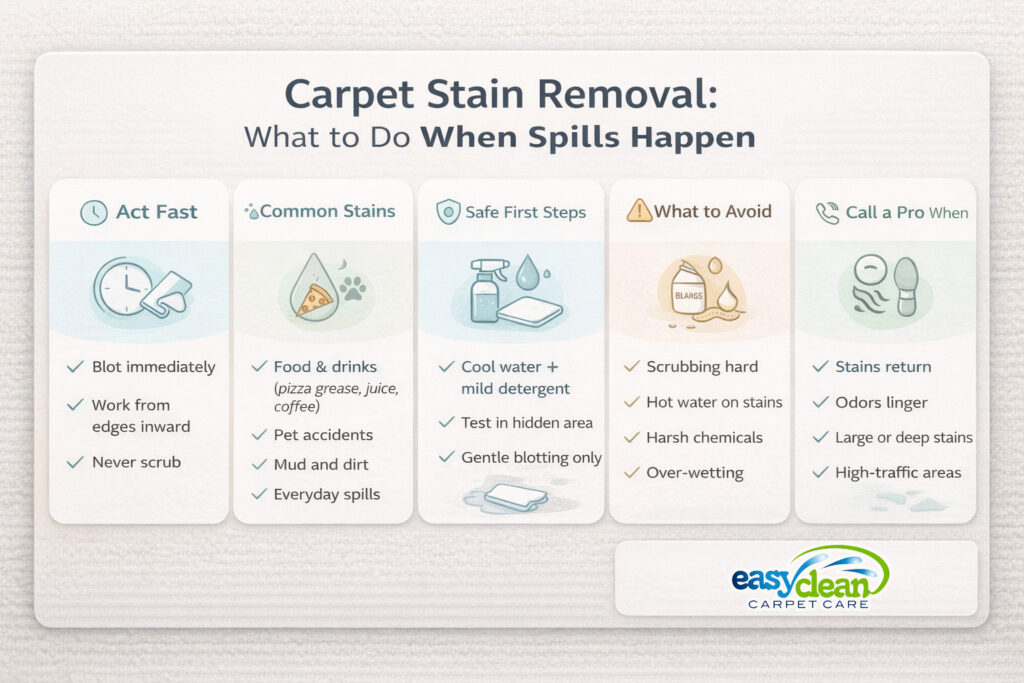
Coffee, soda, juice, and wine are usually water-soluble and respond well to blotting. Sugars left behind, however, can attract dirt if not fully removed.
Pet Accidents
Pet urine and vomit don’t just stain the surface—they can soak into padding and cause lingering odors. Enzymatic cleaners are designed for these situations, but deep contamination often requires professional treatment.
Mud and Tracked-In Dirt
Wet mud should be left to dry completely before being vacuumed thoroughly. Cleaning wet mud usually pushes it deeper into the carpet.
Grease and Oil
Cooking oils, butter, and makeup are oil-based and won’t respond to water alone. These stains are some of the most frustrating for DIY cleaning.
Dye-Based Stains
Red wine, berries, ink, and hair dye bond strongly to carpet fibers. The wrong approach can permanently set these stains, making professional treatment the safest option.
Safe DIY Carpet Stain Removal Methods
For fresh, moderate stains, these homeowner-safe steps are a good place to start.
Start With the Basics
Blot—don’t rub—using a clean white cloth or paper towel. Work from the outside of the stain inward, and use cool or lukewarm water rather than hot.
Consumer Reports offers a helpful overview of safe stain-removal basics for homeowners, including blotting techniques and common mistakes to avoid.
Gentle Cleaning Solutions
Plain water often works best. If needed, try a small amount of clear dish soap mixed with warm water. Apply sparingly, blot, then rinse by blotting with clean water.
A diluted vinegar-and-water solution may help with some stains, but it should always be tested first and thoroughly rinsed.
Always Test First
Test any solution in an inconspicuous area before applying it to a visible spot. If you notice color transfer or texture changes, stop immediately.
Common Carpet Cleaning Mistakes to Avoid
Many permanent carpet issues result from well-intentioned mistakes.
- Scrubbing aggressively, which damages fibers
- Using too much liquid, leading to mold or wicking
- Applying heat, which can set protein-based stains
- Mixing cleaning products
- Using harsh chemicals
Avoid bleach entirely—it can permanently strip color. Hydrogen peroxide is sometimes mentioned online as a stain remover, but it carries a real risk of bleaching or discoloration, especially on darker carpets. While low-strength peroxide may work on certain light carpets when carefully tested, it’s easy to cause damage without realizing it. When in doubt, gentler methods or professional help are safer.
When DIY Carpet Stain Removal Isn’t Enough
Some stains need more than surface cleaning.
The Stain Keeps Coming Back
If a stain disappears but reappears after drying, it has likely reached the padding. Surface cleaning alone won’t fix this.
Odors Return After Cleaning
Lingering smells—especially from pet accidents—often indicate contamination beneath the carpet.
You’re Not Sure What Caused the Stain
Mystery stains are risky to treat without experience. The wrong solution can make things worse.
In these cases, professional carpet cleaning services are often the safest and most effective option.
Professional Carpet Stain Removal: What’s Different
Professional cleaning uses specialized equipment and targeted solutions designed to remove stains more completely while protecting carpet fibers. Hot water extraction removes residue and moisture more effectively, helping carpets dry faster and stay cleaner longer.
Following industry best practices—such as testing first and avoiding overwetting—is also important for protecting your carpet and maintaining your warranty. The Carpet and Rug Institute outlines the standards for protecting your carpet.
Regular professional cleaning can also extend carpet life and improve overall appearance.
How to Prevent Future Carpet Stains
Prevention is often easier than removal.
- Use quality mats at entryways
- Remove shoes indoors
- Place washable rugs in high-risk areas
- Act quickly when spills happen
- Vacuum regularly
Establishing a consistent routine—and understanding overall carpet cleaning and carpet care—goes a long way toward preventing stubborn stains.
If you’re unsure how often professional cleaning should happen, this guide explains recommended carpet cleaning frequency.
Homes with children or pets may also benefit from additional strategies outlined in our practical guide to carpet care for families with kids or pets.
Many of the same principles apply to furniture as well. You may also find our guide on removing upholstery stains safely helpful.
Frequently Asked Questions About Carpet Stain Removal
Can old carpet stains really be removed?
Sometimes. Results depend on the stain type, how long it’s been there, and whether previous cleaning attempts set it permanently.
Does vinegar or baking soda damage carpet?
They’re generally safe when used carefully, but both can leave residue or affect dyes if not tested and rinsed properly.
How long should I wait before calling a professional?
If a stain is large, odorous, or doesn’t improve after one or two gentle attempts, calling sooner is usually better.
Will stain removal affect my carpet warranty?
Many warranties require professional hot water extraction and can be voided by harsh DIY chemicals. Professional cleaning typically supports warranty requirements.
Are professional treatments safe for kids and pets?
Reputable companies use products designed to be safe when applied and rinsed correctly. Drying time is the most important factor.
You Don’t Have to Handle Every Stain Alone
Carpet stains are a normal part of life in a lived-in home. Some are easy DIY fixes. Others need professional attention. Knowing the difference—and stopping before DIY methods cause damage—can save your carpet and your sanity.
If you ever have questions or need help with stubborn stains, you can always contact Easy Clean Carpet Care for guidance. A clean carpet doesn’t mean a perfect home—it means a well-cared-for one.
Additional Resources
If you’d like to go deeper into carpet care and stain prevention, these trusted resources offer clear, homeowner-friendly guidance:
- Consumer Reports – Carpet Stain Removal Guide
Practical, unbiased advice on handling common carpet stains safely at home. - Carpet and Rug Institute (CRI) – Best Practices for Removing Stains
Industry-backed recommendations on spot cleaning, testing solutions, and protecting carpet fibers. - Your Guide to Carpet Cleaning and Carpet Care
A comprehensive overview of routine carpet maintenance, professional cleaning, and long-term care. - Carpet Cleaning: How Often Should You Clean Your Carpet?
Learn how cleaning frequency impacts stain buildup, carpet life, and indoor comfort. - The Practical Guide to Carpet Care for Families with Kids or Pets
Extra tips for managing spills, accidents, and everyday messes in busy households.

Recent Comments