
If you’ve ever mopped your tile floors and wondered why they still look dirty, you’re not alone. The issue usually isn’t the tile itself — it’s the grout. Tile grout cleaning focuses on the porous material between tiles that traps dirt, moisture, and residue, no matter how often you mop. At Easy Clean Carpet Care, we help homeowners understand why this happens and what actually works to restore tile floors so they look clean again, not just temporarily shiny.

Key Points
- Mops Don’t Remove Embedded Grime: Cleaning surface tile with a mop doesn’t clean the porous grout, which traps dirt and moisture, making the floor look dirty even after mopping.
- Porous Nature of Grout Causes Staining: Grout is cement-based and porous, so dirt, oils, and moisture easily soak in, leading to staining and discoloration over time.
- High-Traffic Areas Get Dirty Fastest: Entryways, kitchens, bathrooms, laundry rooms, and mudrooms tend to accumulate dirt and stains quickly, often needing more than routine cleaning.
- DIY Cleaning Has Limitations: Homemade solutions like baking soda paste can help maintain grout, but heavily stained or embedded grime requires professional cleaning for best results.
- Professional Cleaning Restores Grout Appearance: Experts use specialized equipment to deeply clean grout, dramatically improving its color and appearance, often followed by sealing to prevent future staining.
Why Tile Floors Still Look Dirty After Mopping
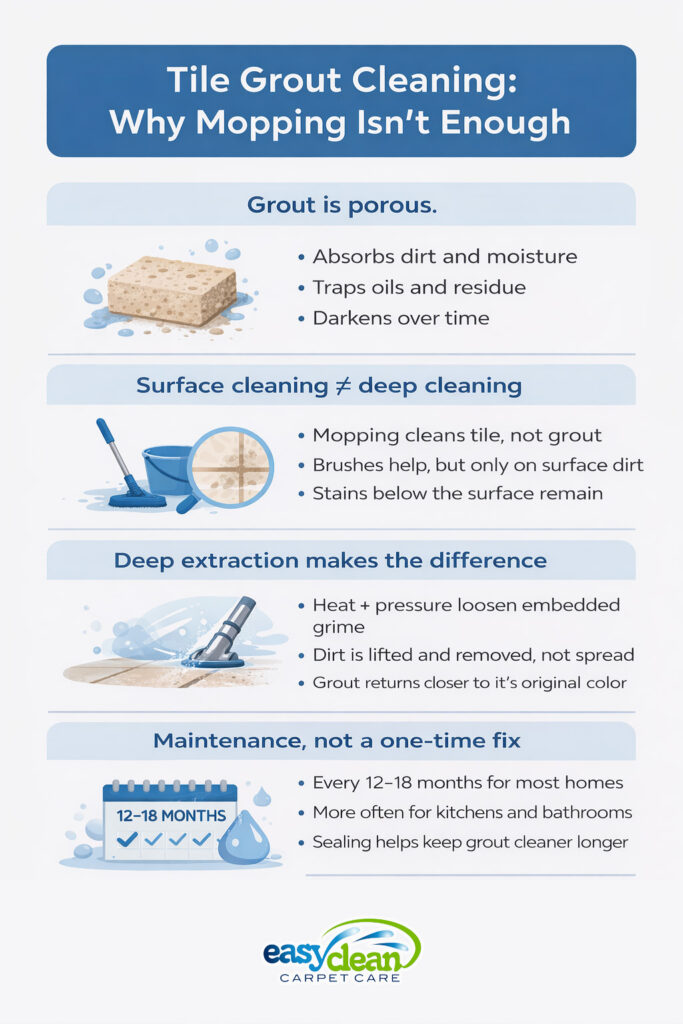
Tile floors still look dirty after mopping because mops clean the tile surface but can’t remove grime embedded in the grout lines. Grout is porous, which means it absorbs dirty mop water, oils, and residue every time the floor is cleaned. Instead of lifting dirt out, mopping often spreads moisture across the grout and pushes contaminants deeper into the grout.
Another problem is that standard mops don’t effectively scrub grout lines. They glide over them. Even with a good cleaner, the grime beneath the surface remains untouched. That’s why tile may look clean while grout stays dark or uneven in color.
What Grout Is and Why It Stains
Grout is a cement-based material used to fill the gaps between tiles, and it’s naturally porous by design. That porosity allows grout to bond properly, but it also makes it highly prone to staining. Dirt, oils, spills, and moisture soak in easily and build up over time.
In kitchens, grease and food particles contribute to discoloration. In bathrooms, moisture, soap residue, and mildew are common causes. Because grout is cement-based, repeated use of strong or acidic cleaners — especially on unsealed grout — can slowly weaken the surface and make staining worse instead of better.
Common Tile and Grout Problem Areas
Grout gets dirtiest the fastest in high-traffic, high-moisture areas. Entryways collect outdoor dirt and debris. Kitchens see grease, spills, and foot traffic around sinks and cooking areas. Bathrooms are especially vulnerable because constant moisture creates ideal conditions for staining and mildew, particularly in shower floors and tub surrounds.
Laundry rooms and mudrooms also tend to show grout discoloration quickly due to water exposure and heavy use. These areas usually need more than routine mopping to stay clean.
DIY Tile Grout Cleaning: What Works and What Doesn’t
DIY tile grout cleaning can help with light surface dirt, but it won’t restore deeply stained grout. For maintenance cleaning, a paste of baking soda and water, applied with a stiff brush, can remove some surface grime when followed by a thorough rinse.
For homeowners looking for a safe, step-by-step approach to routine grout maintenance, This Old House offers a helpful overview of how to clean grout using gentle methods that won’t damage tile or grout.
What doesn’t work well — and can cause damage over time — is frequent use of strong acidic cleaners like vinegar or lemon juice on unsealed grout. While mild, occasional use on sealed grout may be acceptable, repeated exposure can etch cement-based grout, making it more porous. Heavy bleach use and abrasive scrubbers can also weaken grout and cause uneven discoloration.
Steam mops can loosen surface dirt, but steam alone usually isn’t enough to remove deeply embedded grime. Without targeted scrubbing or extraction, the results are often short-lived.
DIY methods are best viewed as routine upkeep, not restoration. Once grout has years of buildup or visible staining, professional cleaning is typically the only way to achieve a meaningful improvement.
Professional Tile Grout Cleaning Explained
Professional tile grout cleaning removes dirt and residue that DIY methods can’t reach. Using specialized equipment, technicians apply controlled heat, pressure, and cleaning solutions to break down contaminants trapped deep within the grout, then extract them completely.
This process goes beyond scrubbing harder. Professional systems clean below the surface without damaging tile or grout when done correctly. Many homeowners notice a dramatic difference in grout color and overall floor appearance after professional cleaning. In many cases, grout sealing is recommended afterward to help protect the freshly cleaned surface from future staining.
You can learn more about our professional tile and grout cleaning services and how the process works in real homes.
How Often Should Grout Be Professionally Cleaned
Most homes benefit from professional grout cleaning every 12 to 18 months. Homes with pets, kids, or heavy foot traffic may need annual service, especially in kitchens and bathrooms. Sealed grout typically stays cleaner longer, while unsealed grout absorbs dirt faster.
If grout looks dark, feels gritty, or has noticeable staining, it’s usually time to schedule cleaning — even if it hasn’t been a full year.
Is Professional Tile Grout Cleaning Safe for Tile Floors?
Yes, professional tile grout cleaning is safe for tile floors when performed by trained technicians using the right methods for the surface. Reputable companies adjust pressure and cleaning solutions based on tile type and grout condition, and they often test a small area first.
Most concerns about damage come from harsh DIY methods rather than professional cleaning. Properly done, professional cleaning is gentler on tile floors than aggressive scrubbing or repeated chemical use. If grout is already cracked or deteriorating, cleaning won’t fix structural issues, but it won’t make them worse either.
Frequently Asked Questions
What is tile grout cleaning?
Tile grout cleaning removes dirt, stains, and buildup from grout lines using specialized equipment and cleaning solutions that go beyond surface mopping.
How long does tile grout cleaning last?
Professional tile grout cleaning typically lasts 12 to 18 months, depending on foot traffic, maintenance habits, and whether the grout is sealed afterward.
Can grout be permanently cleaned?
Grout can’t be permanently cleaned because it’s porous, but sealing after cleaning helps protect it and makes routine maintenance much easier.
Is tile grout cleaning safe for homes with pets or kids?
Yes. Professional tile grout cleaning uses pet- and family-safe products, and floors are safe to use once they’re dry.
When Professional Tile Grout Cleaning Makes Sense
Professional tile grout cleaning makes sense when mopping no longer improves the look of your floors, when grout has visible staining, or when you’re preparing your home for guests or special occasions. Many homeowners notice this need most often before gatherings or during busy seasons, such as the holidays. We see this regularly in homes scheduling grout cleaning before the holidays.
If you’re unsure whether professional cleaning is right for your floors, feel free to contact us with any questions. We’re always happy to help you make the right decision for your home.
Additional Resources
This Old House — How to Clean Grout

Recent Comments