
You’re hosting family for the weekend when someone accidentally knocks over a glass of juice—right onto your favorite chair. Your heart sinks as the stain spreads, and the first thought that hits is whether you can remove upholstery stains safely without making things worse.
At Easy Clean Carpet Care, we see situations like this every day. Upholstery stains are stressful because furniture isn’t cheap, and the wrong cleaning approach can turn a small spill into permanent damage. The good news is that many stains can be addressed safely at home—if you know what you’re dealing with and when to stop.
We will walk you through common upholstery stains, safe first steps, and when professional help is the smarter choice.

Why You Need a Careful Approach to Remove Upholstery Stains
Upholstery isn’t the same as carpet. Furniture fabrics vary widely—cotton, microfiber, polyester blends, velvet, linen—and each reacts differently to moisture and cleaners. What works on one couch can damage another. Many upholstery fabrics include manufacturer cleaning codes that indicate how they should be treated. These codes—such as W, S, WS, or X—help determine whether water-based cleaners, solvents, or professional methods are appropriate. Both American Leather, Explaining Fabric Cleaning Codes, and Sailrite, Understanding Upholstery Fabric Cleaning Codes, explain how these codes protect fabric integrity and why using the wrong method can cause permanent damage.
There’s also more going on beneath the surface. Upholstery includes padding and foam that can absorb liquids quickly. When stains soak past the fabric layer, they can lead to lingering odors, mildew, or water marks that reappear days later. This is why over-wetting is one of the most common mistakes homeowners make when trying to remove upholstery stains.
If you want a deeper overview of fabric types and care basics, see Cleaning Upholstery 101: Basics Every Homeowner Should Know.
Common Upholstery Stains and How to Handle Them Safely
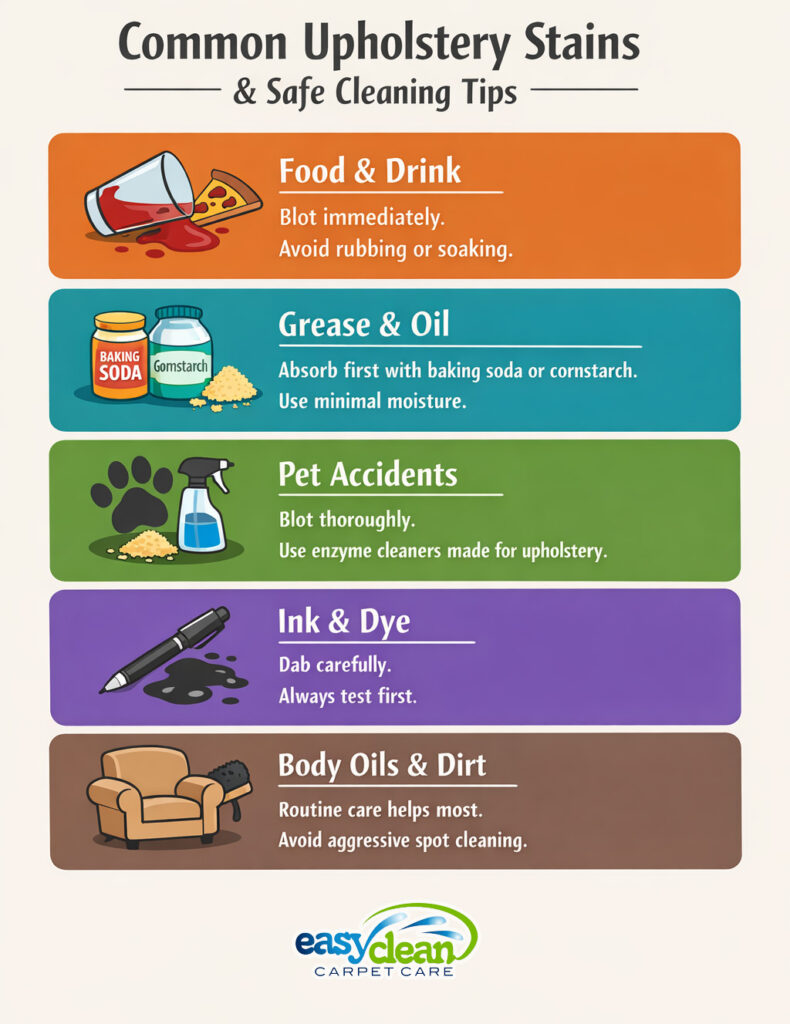
Food and Drink Stains
Food and drink stains can often be safely treated at home if they’re fresh and handled gently, but they can spread quickly if cleaned the wrong way.
Why they’re tricky:
These liquids spread quickly and can carry sugars or dyes deep into the fabric.
Safe first steps:
Blot immediately with a clean, white cloth, working from the outside of the stain inward. Avoid rubbing, as it can push the liquid deeper into the fabric. As noted in Molly Maid’s How to Clean Couch Stains, mild solutions and gentle blotting are often enough for fresh spills, as long as moisture is kept to a minimum.
What to avoid:
Don’t rub, don’t pour water directly onto the fabric, and don’t apply heat—it can set stains permanently.
Grease and Oil
Grease and oil stains are harder to remove than water-based spills and usually require absorption before moisture is applied.
Why they’re tricky:
Oil binds to fibers and doesn’t respond well to water alone.
Safe first steps:
Sprinkle baking soda or cornstarch on the area to absorb oil. Let it sit for 15–20 minutes, then vacuum. If needed, a very diluted drop of mild dish soap applied with a barely damp cloth may help—always test first.
What to avoid:
Avoid scrubbing or soaking the area, which can spread the stain deeper.
Pet Accidents
Pet stains are challenging because they involve both visible staining and odor that often reaches the padding beneath upholstery fabric.
Why they’re tricky:
Liquids often reach the padding beneath the fabric, making odors hard to eliminate.
Safe first steps:
Blot thoroughly to remove as much moisture as possible. Use a pet-specific enzymatic cleaner designed for upholstery, following directions carefully and testing first.
What to avoid:
Do not use ammonia-based cleaners, which can smell like urine to pets and encourage repeat accidents. Avoid heat or steam.
Ink and Dye Transfer
Ink and dye stains are high-risk for DIY cleaning and can worsen quickly if treated aggressively.
Why they’re tricky:
These stains bond quickly to fibers and can worsen if treated aggressively.
Safe first steps:
Lightly dab with rubbing alcohol using a white cloth. Test first and use minimal pressure.
What to avoid:
Never rub hard or apply excess liquid—ink can spread fast.
Dirt and Body Oils
Dirt and body oil stains build up gradually and usually respond better to routine maintenance than aggressive spot cleaning.
Why they’re tricky:
They’re gradual and often deeply embedded by the time they’re noticed.
Safe first steps:
Regular vacuuming helps prevent buildup. For light soiling, a gently damp microfiber cloth may help. Mild soap solutions should be used sparingly and tested first.
Spot cleaning helps between appointments, but full cleaning should still be scheduled regularly. See our article on how often upholstery cleaning is needed for guidance based on your household.
What to Avoid When Trying to Remove Upholstery Stains
Some common mistakes cause more damage than the original stain:
- Over-wetting, which can lead to odors or mildew
- Harsh chemicals like bleach or undiluted vinegar
- Scrubbing, which damages fibers and spreads stains
- Heat, which can set stains and shrink fabric
- Mixing cleaners, which can cause chemical reactions or residue buildup
When in doubt, stop and reassess. Testing in an inconspicuous area is always essential.
When DIY Is Okay — and When to Call a Professional
DIY cleaning can work for:
- Fresh, minor spills
- Clearly labeled water-safe fabrics
- Light surface stains are handled quickly
However, it’s time to consider professional upholstery cleaning if:
- A stain has been sitting for days or weeks
- You’ve already tried cleaning, and it didn’t improve
- The fabric is delicate or unlabeled
- Odors remain after drying
- Watermarks appear after cleaning
If you’re unsure where that line is, our guide on DIY vs. professional furniture cleaning explains what homeowners can safely handle and when expert care makes more sense.
How Professional Cleaning Helps to Remove Upholstery Stains
Professional cleaning starts with identifying the fabric and its cleaning code. From there, safe methods and controlled moisture levels are used to lift stains without saturating padding.
Professional equipment removes more residue and moisture than household methods, reducing dry time and the risk of odors. Beyond stain removal, professional cleaning also refreshes fabric, removes buildup, and helps extend the life of your furniture.
Even national cleaning organizations emphasize that not all upholstery stains are suited for DIY treatment. Guidance from Stanley Steemer, Your Guide On How to Clean A Couch, highlights that repeated cleaning attempts, deep-set stains, or delicate fabrics often require professional equipment and controlled moisture to avoid long-term damage.
Frequently Asked Questions
Can I remove upholstery stains with household products?
Some mild products may work if used carefully and tested first. Many household cleaners are too harsh and can cause discoloration or residue.
How do I know if my fabric is safe to clean?
Check the manufacturer’s tag for cleaning codes: W, S, WS, or X. If no tag is present, professional guidance is safest.
What stains should never be treated with DIY cleaners?
Delicate fabrics, ink, dye transfer, set-in stains, and deep pet odors are best handled by professionals.
How long should I wait before calling a professional?
If a stain doesn’t improve after careful blotting—or reappears after drying—it’s time to call.
Will professional cleaning remove old stains?
Results vary, but professional cleaning often improves or removes stains that DIY methods cannot.
Protect Your Furniture with the Right Care
Upholstery stains don’t have to mean replacing your furniture. With quick action, gentle methods, and knowing when to stop, many stains can be handled safely. When they can’t, professional care protects both your furniture and your peace of mind.
If stains are appearing elsewhere in your home, you may also find our guide to carpet stain removal helpful.
If you’re unsure how to remove upholstery stains safely or want help with a stubborn spot, feel free to contact us. We’re always happy to help.
Additional Resources
Internal Resources
- Cleaning Upholstery 101: Basics Every Homeowner Should Know
- DIY vs. Professional Furniture Cleaning: What’s Worth Your Time?
- Upholstery Cleaning Services – Easy Clean Carpet Care
- Carpet Stain Removal: Practical Tips for Real-Life Spills
External Resources
- Molly Maid – How to Clean Couch Stains
- American Leather – Explaining Fabric Cleaning Codes
- Sailrite – Understanding Upholstery Fabric Cleaning Codes
- Stanley Steemer – Your Guide On How to Clean A Couch

Recent Comments