
If you’ve ever stared at your kitchen floor wondering whether to grab a scrub brush or call a professional, you’re not alone. Tile and grout cleaning is one of those tasks that looks simple until you’re an hour in with sore knees and grout that still looks gray. At Easy Clean Carpet Care, we regularly talk with homeowners who have tried both approaches, and the right choice usually depends on what you’re actually dealing with. Here’s a practical, honest comparison to help you decide what’s worth your time.

Key Points
- DIY Tile and Grout Cleaning Effectiveness: DIY methods can handle light surface dirt and weekly upkeep, but they have limits in deep cleaning as grout is porous and dirt can settle below the surface.
- Risks of DIY Grout Cleaning: Using harsh products like vinegar, bleach, or abrasive pads can damage grout or tile surfaces, especially if not used carefully, and steam cleaners may not effectively remove embedded grime.
- Benefits of Professional Tile and Grout Cleaning: Professionals use specialized equipment and controlled processes to deeply clean and remove ingrained dirt, providing longer-lasting and more effective results.
- When to Choose DIY or Professional Cleaning: DIY is suitable for routine maintenance and light stains, but persistent discoloration, mold, or heavy buildup benefit from professional cleaning to restore appearance and cleanliness.
- Is Professional Cleaning Worth It?: Considering the time saved, superior results, and long-term preservation of grout, professional cleaning is a practical investment, especially in high-traffic or heavily used areas.
Does DIY Tile and Grout Cleaning Actually Work?
DIY tile and grout cleaning can work for light surface dirt, but it has limits when grime is embedded deep within the grout. For routine maintenance, a baking soda paste with gentle scrubbing can brighten recently discolored grout lines. That kind of surface cleaning is reasonable for weekly or monthly upkeep.
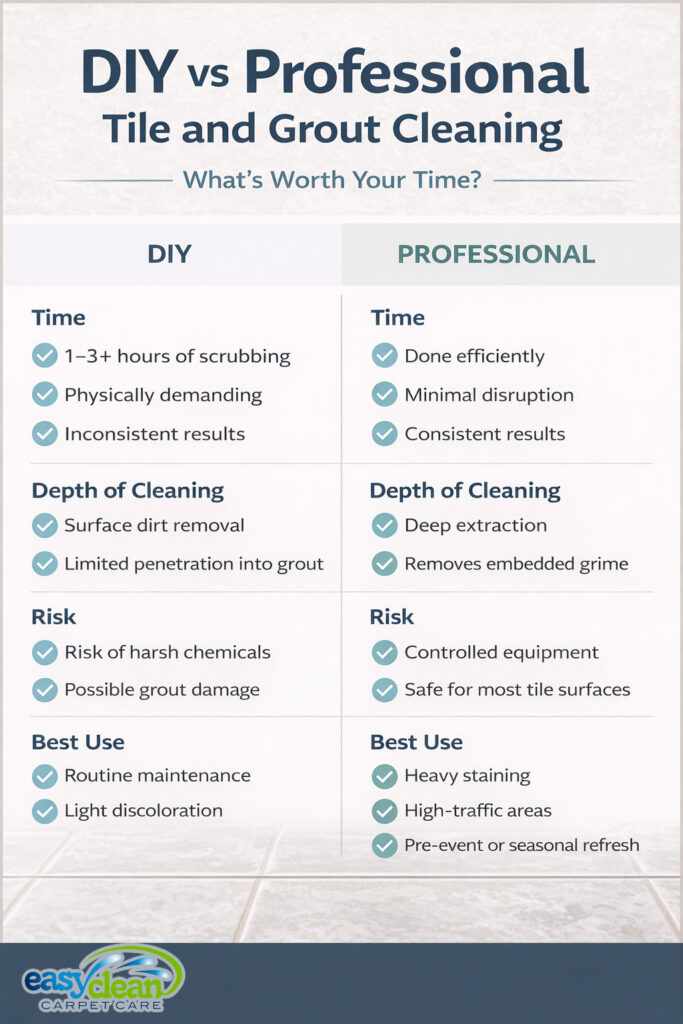
The challenge is time and depth. Scrubbing a small bathroom floor can take over an hour, and larger kitchens or tiled showers can take much longer. More importantly, scrubbing mainly addresses surface soil. Because grout is porous, years of grease, moisture, and dirt can settle below the surface where brushes cannot fully reach.
DIY methods are best viewed as maintenance, not restoration.
What Are the Risks of DIY Grout Cleaning?
DIY grout cleaning can cause damage if harsh products or improper tools are used. Acidic cleaners like vinegar are often recommended online, but manufacturers caution that frequent use can weaken cement-based grout and may damage natural stone surfaces. Mapei, a major grout manufacturer, explains that vinegar should be avoided for routine grout cleaning due to its acidity and potential long-term effects on grout integrity.
Bleach can temporarily lighten surface mold, but overuse may discolor grout and does not always address deeper contamination. Abrasive pads can scratch certain tile finishes, increasing the likelihood that dirt will later get trapped in them.
Steam cleaners can help loosen surface grime, but many consumer-grade units may not provide consistent heat or extraction power to remove deeply embedded buildup. On older or already compromised grout, excess moisture can also create problems if not properly extracted.
None of this means you shouldn’t clean your own tile. It simply means that DIY comes with limits and some risk if products aren’t chosen carefully.
What Makes Professional Tile and Grout Cleaning Different?
Professional tile and grout cleaning removes embedded dirt that DIY methods cannot reach. The difference is not just effort — it is equipment and process.
Professional systems use controlled heat and pressure to loosen contaminants trapped inside porous grout, then immediately extract that debris rather than spreading it across the surface. This results in a genuinely deep clean instead of a temporary improvement in appearance.
Our professional tile and grout cleaning process is designed to adjust pressure and temperature based on tile type and grout condition, making it effective without being aggressive. For homeowners dealing with years of buildup or stubborn discoloration, the gap between a professional result and a DIY scrub is noticeable.
If you’d like a deeper explanation of why grout stains so easily and how the process works step by step, our guide to tile grout cleaning walks through it in detail.
When Is DIY Enough — and When Is It Not?
DIY is enough for routine maintenance, while professional cleaning is best when restoration or significant buildup is involved. Light discoloration that appeared recently can often be improved with home cleaning. Regular upkeep between professional visits also helps maintain results.
However, grout that has been darkening for years, mold that keeps returning, or floors that still look uneven after scrubbing are strong indicators that deeper cleaning is needed. Many homeowners notice this most when preparing for guests or special occasions, especially during the holidays. If that sounds familiar, you may also find our post on cleaning grout before the holidays helpful.
High-traffic areas, entryways, kitchens, and homes with pets or children tend to accumulate embedded soil more quickly than low-traffic areas. In those situations, professional cleaning saves both time and frustration.
Is Professional Tile and Grout Cleaning Worth the Cost?
Professional tile and grout cleaning is worth the cost when you consider the time saved, the results achieved, and the long-term maintenance benefits. A professional can clean an area in a fraction of the time it would take to scrub by hand, and the results typically last longer because the cleaning is deeper.
Cost guides from major home service platforms like HomeAdvisor show that professional tile and grout cleaning is generally priced per square foot and falls within the range of normal home maintenance expenses rather than luxury services.
Beyond appearance, removing embedded dirt and moisture helps preserve grout condition and reduce premature wear. When weighed against hours of labor and the risk of unintended damage from harsh products, professional cleaning is often a practical investment.
Making the Right Call for Your Home
Both DIY and professional tile and grout cleaning have a place in home maintenance. DIY works well for routine surface upkeep. Professional cleaning is the better option when stains persist, when grout has years of buildup, or when you simply want the job done thoroughly without spending your weekend scrubbing.
If you’re unsure what condition your grout is actually in, you’re always welcome to contact us with questions. We’re happy to offer straightforward guidance so you can make the right decision for your home.
Frequently Asked Questions
Can I clean grout myself instead of hiring a professional?
Yes, you can clean grout yourself for light surface dirt, but DIY methods typically cannot remove deeply embedded stains.
How often should tile and grout be professionally cleaned?
Most homes benefit from professional tile and grout cleaning every 12 to 18 months, depending on traffic and moisture levels.
Does vinegar damage grout?
Frequent use of vinegar can weaken cement-based grout over time, especially on unsealed surfaces, according to manufacturer guidance.
Is professional tile and grout cleaning safe for my floors?
Yes, when performed correctly with proper equipment and controlled pressure, professional tile and grout cleaning is safe for most tile surfaces.
Additional Resources
- Mapei — Can I Use Vinegar to Clean My Tile and Grout?
- HomeAdvisor — Cost to Clean Tile and Grout
- Angi — How Much Does Tile and Grout Cleaning Cost? [2026 Data}

Recent Comments